 | Proudly Serving the Central Valley | 24/7 On Call Service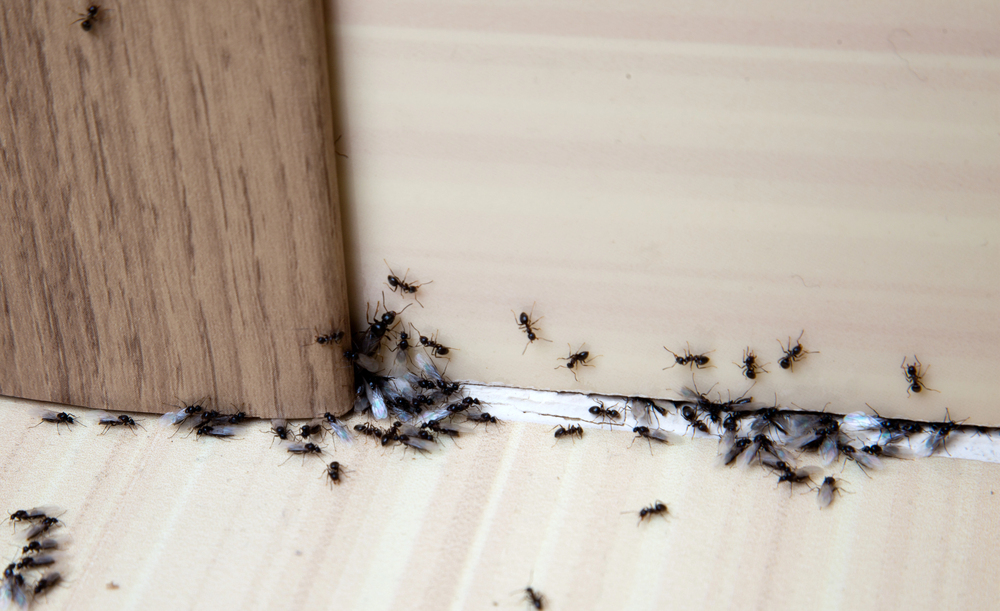
If you have ever sprayed a trail of ants in your kitchen, watched them disappear, and then found them back two days later, you already know the frustrating truth: killing the ants you see does not solve the problem. The colony they came from is still out there, completely untouched, and it will keep sending workers into your home until something reaches the source.
That is what professional ant pest control is designed to do. Not just knock back the visible ants, but eliminate the colony at the root. Understanding how it works makes it a lot easier to know what to expect, why it takes the time it does, and why it works so much better than what most homeowners try on their own.
Why Killing the Ants You See Doesn’t Solve the Infestation
Most homeowners reach for a spray because it delivers instant results. The ants on the counter disappear in seconds. The problem is that those foraging ants represent only a small fraction of the colony. The rest, including workers, larvae, and the queen, remain hidden underground and unaffected.
Another surprising fact is that not every worker ant is active at the same time. Studies show that up to 30 percent of workers can remain inactive, functioning as a reserve labor force that replaces lost workers when needed. This behavior has been documented in entomology research and resources from programs such as UC IPM (University of California Integrated Pest Management).
In Central California, the issue is even more challenging because of the Argentine ant, the most common household ant in the region. Unlike many species, Argentine ants form massive supercolonies made up of multiple interconnected nests and hundreds of queens. Killing workers from one nest barely affects the overall population because the network quickly replaces them.
This is why surface sprays rarely solve recurring ant problems. They remove visible ants but leave the colony intact, allowing the infestation to continue.
How Ant Bait Stations Work
Ant bait stations are small enclosed containers that hold bait while protecting it from weather, pets, and accidental contact. They control how ants access the bait and keep it attractive long enough for workers to repeatedly feed and carry it back to the colony.
Inside the station is a slow-acting insecticide mixed with food that foraging ants find irresistible. Workers collect the bait and bring it back to the nest, where it is shared with other ants, larvae, and the queen through a food-sharing process that sustains the colony. Because the insecticide works slowly, ants have time to spread it throughout the colony before it takes effect. This allows the treatment to reach ants that surface sprays never touch.
The result is colony collapse rather than a temporary drop in ant activity.
Two things are important to know about bait. First, you may see more ants shortly after placing bait, which is actually a good sign because it means foragers are finding it and carrying it back to the nest. Second, avoid using spray near bait stations. Most sprays repel ants, which prevents them from reaching the bait and spreading it through the colony.
What Professional Ant Treatment Actually Looks Like
Professional ant treatment is not simply a stronger version of store-bought products. It often begins with a detailed inspection to identify ant species, nesting sites, and entry points before treatment begins.
Species Identification Comes First
Different ants respond to different baits and treatments. Argentine ants, the most common household ant in Central California, prefer sugar-based baits. Odorous house ants behave similarly. Carpenter ants require a different strategy because they can damage wood and may need nest treatments in addition to baiting. Fire ants, which occur in parts of the Central Valley, typically require protein-based baits and targeted mound treatment.
A trained technician identifies the species before choosing any product. Using the wrong bait is one of the most common reasons DIY ant control fails.
Targeted Placement and Perimeter Treatment
Placement matters as much as the bait itself. Professionals locate active trails, entry points, and moisture sources, then place bait where foraging ants are most likely to find it and carry it back to the colony. When necessary, they may also apply perimeter treatments to reduce ants entering the structure.
In California, certain perimeter sprays such as pyrethroids are regulated because of water quality concerns. Licensed professionals follow these regulations and select treatments that are both effective and compliant.
Exclusion and Long-Term Prevention
Effective ant control does not stop with product application. Technicians also identify conditions that attract ants, such as cracks around doors and windows, moisture from leaking pipes, gaps around utility lines, or vegetation and mulch against the foundation.
Sealing these entry points and correcting moisture issues helps prevent future infestations.
Is Pest Control for Ants Worth It?
For a small, seasonal ant problem in one area, a properly placed store-bought bait may work. But for infestations that return year after year, carpenter ants near wood structures, or the heavy Argentine ant pressure common in Fresno, Bakersfield, and the surrounding Central Valley, professional treatment is usually the faster and more cost-effective solution.
Repeated DIY attempts often add up in both time and expense. A professional treatment identifies the ant species, places the right bait in the right locations, and follows up if needed to eliminate the colony rather than temporarily reduce activity.
At RidX Pest Control, every service comes with a 100% guarantee. If ants return after treatment, we return too, at no additional charge. That level of accountability is not something a can of spray can provide.
How Long Does Ant Pest Control Take to Work?
This is one of the most common questions homeowners ask. Most bait-based treatments reduce ant activity within 5 to 14 days, while full colony elimination for larger infestations can take up to four weeks. It is normal to see more ants during the first few days after treatment. That usually means foragers have found the bait and are carrying it back to the colony.
Spray-based perimeter treatments produce faster visible results, but they mainly kill surface ants and do not eliminate the colony. Because of this, sprays often need repeated applications. Bait programs take longer but are designed to eliminate the colony itself.
For large infestations, especially Argentine ant supercolonies with multiple nesting sites, a follow-up visit may be recommended to ensure complete control.
How to Prevent Ants from Returning
Removing the colony solves the immediate problem, but preventing new infestations requires a few simple steps:
- Seal cracks around doors, windows, and foundation gaps
- Repair leaking pipes or outdoor faucets that create moisture
- Trim vegetation and branches that touch the home
- Store food in sealed containers and clean up crumbs promptly
These small changes remove the food, water, and entry points ants rely on to establish new trails indoors.
Getting Rid of Ants in Fresno, Bakersfield, or Madera
Ant activity in the Central Valley follows a predictable seasonal pattern. Argentine ants are most active from late spring through early fall, when hot, dry weather pushes them indoors in search of food and water. Older homes in Fresno, Bakersfield, and Madera often have more entry points and favorable conditions for ants, which is why infestations can be more persistent in established neighborhoods.
RidX Pest Control has been treating ant infestations across Central California for over 25 years. When you call, you speak directly with the owner, not a call center. You get guidance from someone who understands the local ant species and will explain exactly what the treatment involves before work begins.
Contact us today to schedule your inspection. RidX Pest Control proudly serves Fresno, Bakersfield, Madera, and surrounding Central Valley communities.
Frequently Asked Questions
Is pest control for ants worth it?
For persistent or recurring infestations, yes. Professional treatment identifies the ant species, applies the correct bait, and targets the colony rather than just the visible workers. For homeowners dealing with aggressive species like Argentine ants or carpenter ants in the Central Valley, professional treatment is often the fastest and most reliable solution.
Why do 30% of ants do nothing?
These ants act as a reserve workforce. Research suggests they remain inactive until the colony loses workers, then quickly replace them. This is why killing visible ants with spray often provides only temporary relief. Bait treatments work better because they spread through the colony via food sharing.
How long does ant pest control take to work?
Bait-based treatments usually reduce ant activity within 5 to 14 days, while full colony elimination can take up to four weeks for larger infestations. Seeing more ants shortly after bait placement is normal and indicates the bait is being carried back to the colony.
How do exterminators get rid of an ant infestation?
Professionals begin by identifying the ant species, then placing bait where foraging ants will find and carry it back to the nest. They may also apply targeted perimeter treatments and address entry points or moisture sources that attract ants. Follow-up visits may be recommended for large or multi-colony infestations.
