 | Proudly Serving the Central Valley | 24/7 On Call Service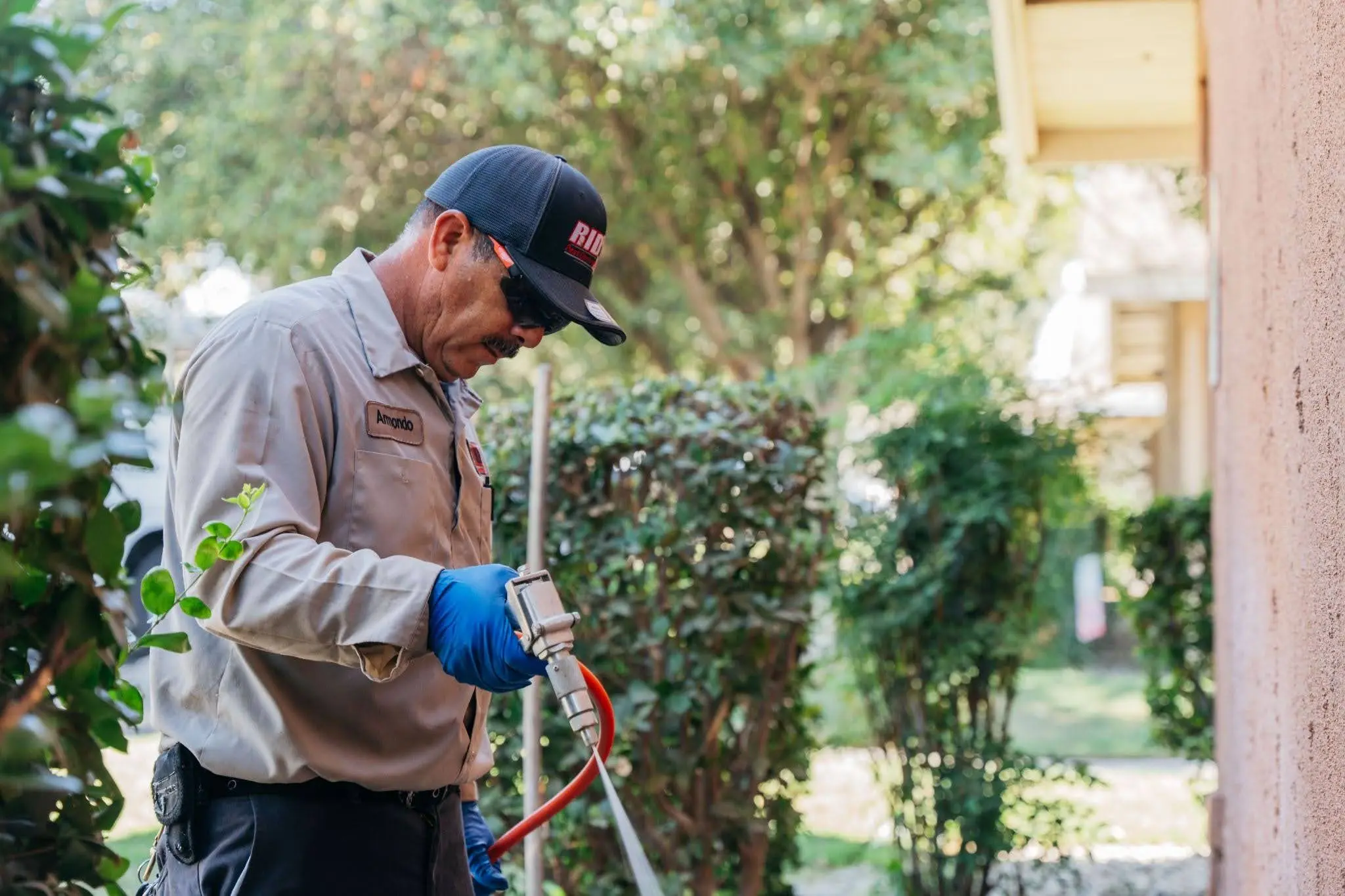
Seeing one bee near a porch light doesn’t mean there’s a nest problem. Seeing the same wasp fly in and out of a gap in the eaves a dozen times in an hour usually does. Knowing the difference matters, because bees, wasps, and hornets each behave differently, and treating them the wrong way can turn a manageable situation into a swarm response. Nests from all three commonly turn up in trees, under roof eaves, and around outdoor equipment — exactly the spots people and pets pass by every day.
That proximity is why pest control for bees and wasps usually calls for a professional rather than a can of spray from a ladder: a wrong move at the nest can provoke dozens of stings at once, and getting it right the first time matters more than getting it done fast.
Not All Stinging Insects Are the Same Problem
Bees, wasps, and hornets get grouped together in casual conversation, but they nest differently, defend their nests differently, and require different removal approaches — part of why a generalist DIY spray often doesn’t work on the first try.
What they have in common is risk to people with venom allergies. Anaphylactic shock, a severe whole-body allergic reaction, requires immediate emergency care, which is exactly why anyone with a history of severe reactions should carry an epinephrine auto-injector rather than rely on avoidance alone.
Because reactions can escalate quickly, treating an active nest isn’t just pest control — it’s reducing exposure risk for everyone nearby until the nest is gone.
Why DIY Nest Removal Goes Wrong
The instinct to swat or spray from a distance often backfires. Bees release a chemical when they sting that can attract more bees to defend the nest, turning a one-sting encounter into a multi-sting one — and swatting at a single insect can provoke it to sting in the first place.
Ladders make this worse. Treating a nest under an eave or in a tree means working at height, ideally at dusk when insects are least active, wearing protective gear — conditions most homeowners aren’t set up to handle safely.
If a nest is disturbed but not eliminated, the colony often relocates just far enough to be harder to find. Half-finished DIY attempts are one of the more common reasons people end up calling a professional anyway, usually right after a worse sting incident than the one they started with.
When Pest Control for Bees and Wasps Should Include Saving the Hive
Not every nest needs to be destroyed. Honey bees are important pollinators, and federal pesticide policy has moved specifically toward reducing pesticide exposure to bees, including label restrictions on applications during active foraging periods.
A licensed technician can usually tell the difference between a honey bee colony worth relocating and a yellowjacket or wasp nest that needs to be eliminated for safety — a distinction that matters both for pollinator health and for choosing the right removal method.
RidX offers organic and eco-friendly treatment options for exactly this reason: when a hive can be safely relocated instead of destroyed, that’s often the better outcome for the property and the surrounding garden.
What to Expect When You Call a Professional
A proper visit starts with identifying the insect and locating the nest, since treatment for a ground-nesting yellowjacket colony looks different from treatment for a paper wasp nest under a roofline.
Most nest treatments happen at dusk or dawn, when insects are least active, using equipment that keeps the technician — and anyone standing nearby — at a safe distance during application. Because a bee or wasp inspection often overlaps with a broader check for ants or entry points, many residential pest control services bundle it into a single visit rather than a standalone call.
Follow-up matters too. A technician should confirm the nest is inactive on a return visit, since a queen that survives an incomplete treatment can rebuild in the same spot within weeks.
Handle the Nest Right the First Time
A wasp or bee nest close to a doorway, vent, or play area isn’t a wait-and-see problem, but it also isn’t one to handle with a ladder and a hardware-store can. Getting the identification and removal right the first time is what keeps a sting incident from turning into a repeat visit.
If you’ve spotted an active nest anywhere on a Madera, Fresno, or Bakersfield property, call RidX Pest Control at (888) 298-7513 or request a free inspection before anyone gets too close.
