 | Proudly Serving the Central Valley | 24/7 On Call Service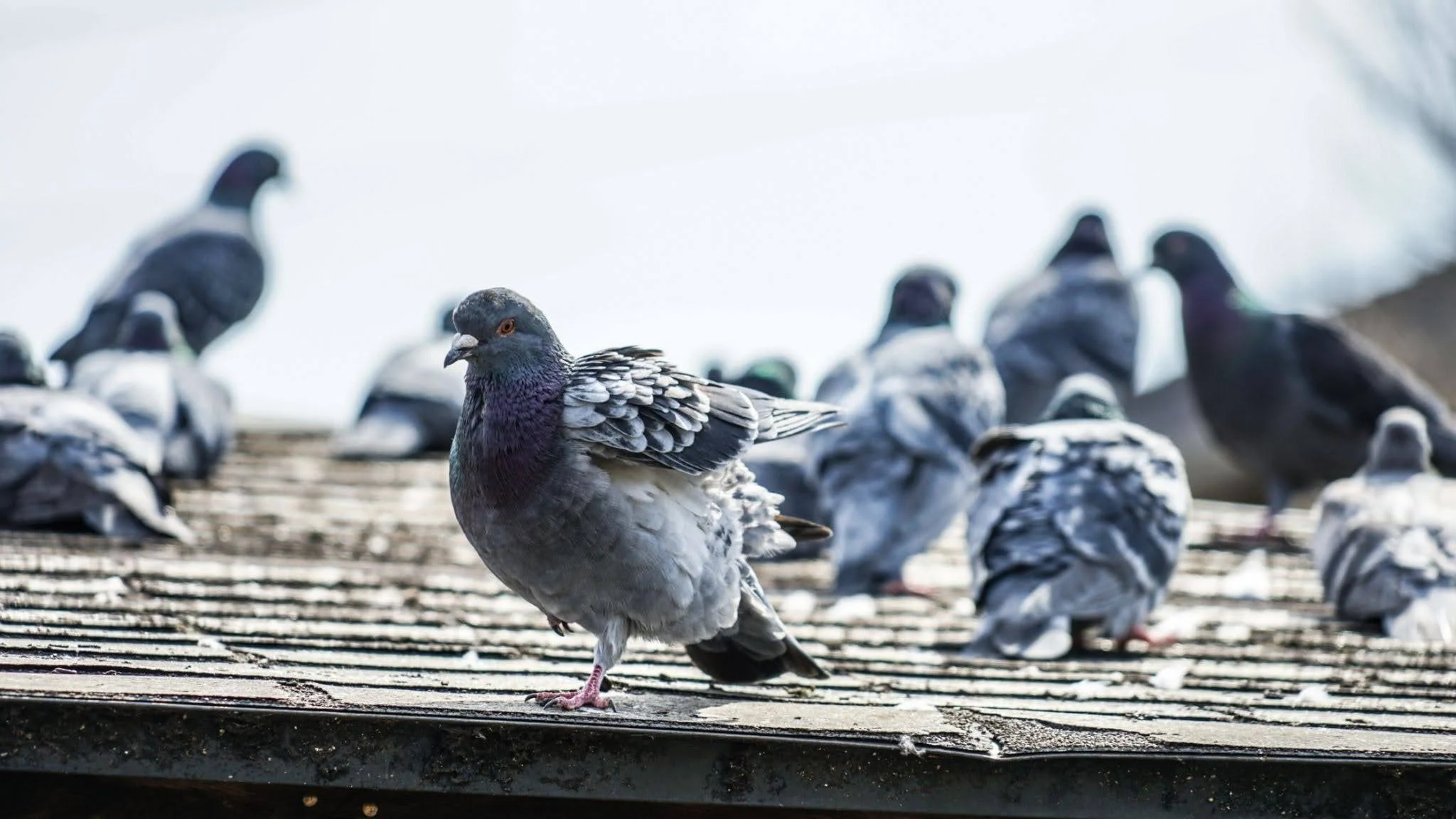
Large accumulations of bird droppings aren’t just unsightly — the CDC specifically recommends that big buildup be cleaned up by a professional company experienced in hazardous waste removal, not swept away with a hose. That recommendation exists because soil or surfaces enriched with bird droppings can harbor Histoplasma, a fungus that causes a lung infection when spores get disturbed and inhaled — a risk that grows every time droppings accumulate and get cleaned up without exclusion in place.
Bird exclusion netting breaks that cycle by keeping birds from landing and roosting in the first place, which means less mess, less repeated cleanup, and less recurring exposure risk than treating the droppings after the fact every few months.
Why Cleanup Alone Doesn’t Solve the Problem
Hosing off a ledge or ceiling beam removes the visible mess, but it does nothing to stop birds from roosting in the same spot again, which means the same hazard reappears on a predictable schedule.
Beyond histoplasmosis, exposure to accumulated bird droppings has also been linked to other fungal and bacterial risks that outdoor and maintenance workers specifically face when disturbing contaminated material without protection. Repeated cleanup also tends to cost more over a year than a one-time exclusion installation, since the labor recurs indefinitely while netting is a single project.
How Bird Exclusion Netting Actually Works
Bird exclusion netting physically blocks access to ledges, eaves, rafters, and other roosting or nesting sites without harming the birds — it simply makes the space impossible to land on or build in.
Properly installed netting is nearly invisible from a distance, which matters for commercial properties where a visible bird-control system can look worse to customers than the occasional bird itself. Unlike spikes or repellent gels, which only protect a narrow surface, netting can cover an entire opening — a loading dock, an eave line, an entire building face — making it the more complete solution for a persistent roosting problem.
Pigeon Removal vs. Long-Term Exclusion
Pigeon removal addresses the birds currently present, but without a physical barrier in place, a cleared-out roosting spot is usually just an invitation for the next flock to move in.
Combining removal with netting installation addresses both sides of the problem — the birds present now, and the ones that would otherwise replace them once the site is clear again. For a building with an established, long-term pigeon or bird problem, netting is what actually changes the long-term outcome rather than resetting the clock on the same cycle.
Which Birds Typically Trigger Exclusion Work
Pigeons are the most common trigger for exclusion work on commercial buildings, since they favor flat ledges, rooflines, and covered structures like loading docks and parking garages.
House sparrows and European starlings cause a different kind of problem — they’re small enough to squeeze into gaps around signage, vents, and eaves that would never fit a pigeon, which means an exclusion plan built only around pigeon-sized openings can still leave a building vulnerable to smaller birds.
Identifying which species is actually present changes the plan: a pigeon problem calls for netting or ledge products at a larger scale, while a sparrow or starling problem often calls for closing much smaller gaps in addition to any netting.
Comparing Netting to Spikes and Gel Repellents
Bird spikes work well on narrow ledges and ridge lines but don’t scale to large open areas like an eave line or a loading dock opening, where birds can simply land around them.
Gel repellents rely on a sticky, uncomfortable texture birds avoid, but they lose effectiveness as dust and debris accumulate on the surface, which means they typically need more frequent maintenance than netting does.
Netting is generally the more complete solution for large or complex spaces precisely because it physically blocks access rather than making a surface merely uncomfortable to land on. The trade-off is a more involved installation upfront in exchange for less recurring maintenance afterward.
Keep the Birds Out, Not Just the Mess Cleaned Up
A building that keeps needing bird droppings cleaned off the same ledge every few months doesn’t have a cleaning problem — it has an access problem, and access is what netting actually solves.
If birds keep returning to the same roof line, eave, or loading dock on a Madera, Fresno, or Bakersfield property, call RidX Pest Control at (888) 298-7513 or request a bird exclusion quote to stop the cycle for good.
