
 | Proudly Serving the Central Valley | 24/7 On Call Service
Termites don’t stay put. Once a colony establishes itself, it spreads through swarming flights, underground tunnel networks, infested materials, and direct contact between structures. What starts as a small problem in one corner of your home can quickly become a widespread infestation.
Subterranean termite colonies extend foraging tunnels 100-230 feet underground, easily reaching from one home to another. A single mature colony contains hundreds of thousands of termites working 24/7 to find new food sources.
If you prefer expert support, RidX provides professional termite inspections and treatment plans to find active colonies, stop their spread, and help protect your home.
How Termites Move Through Your Home
To protect your property, it helps to understand exactly how termites spread inside your home.
Tunneling Through Walls and Wood
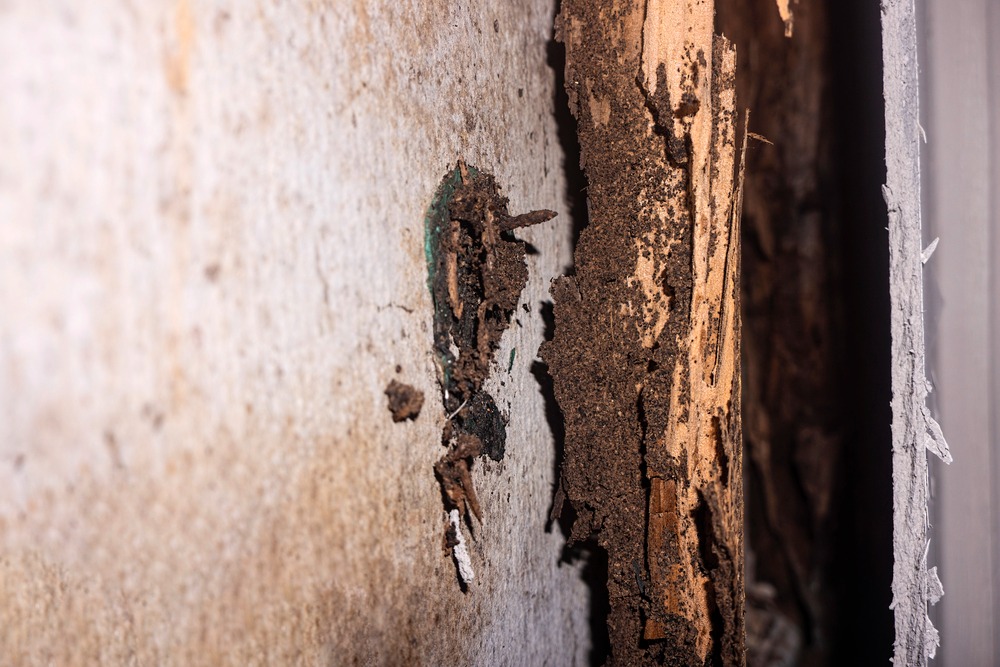
Subterranean termites move through soil and build mud tubes to stay moist and protected from light. These narrow tunnels can appear:
- Along foundations
- Up walls
- Across brick or concrete
- Around plumbing and utility lines
Once inside, termites travel through walls by following wooden studs, floor joists, and subfloor framing, moving from room to room without being seen.
They feed on anything containing cellulose, including:
- Framing timber and skirting boards
- Door frames and window trims
- Loft timbers and subfloors
- The paper layer on plasterboard
- Furniture, cardboard boxes, books, and stored items
If it contains cellulose, termites can eat it.
Swarming Inside Structures
When a colony matures, reproductive termites develop wings and become swarmers (alates). They are attracted to light, so you may find them:
- Around window sills
- Near doors
- On countertops under light fixtures
- Inside ceiling light fittings
Indoor swarms are a serious warning sign. They indicate that termites are already established inside the structure and are now attempting to create additional colonies elsewhere in the building.
Moisture and Structural Vulnerabilities
Moisture makes it easier for termites to expand their territory and feed. Common problem areas include:
- Leaking pipes and damp bathrooms
- Poor ventilation in crawl spaces or lofts
- Blocked or overflowing gutters
- Overwatered soil near the foundation
Structural gaps also help termites spread, such as:
- Cracks in concrete foundations
- Gaps around pipes and wiring
- Areas where timber is in direct contact with soil
Moisture + easy access = ideal conditions for termites to move deeper into your home.
How Termites Move Between Properties
Termites do not respect fences or boundaries. Once they are in an area, they can easily move between homes.
Underground Foraging Tunnels
Subterranean colonies build underground tunnels that can extend 30 to 70 meters in any direction. These tunnels follow tree roots, drains, utility lines, and natural moisture in the soil. If your neighbor has termites, and your property is within that range, it is very possible the same colony can reach your foundations.
Swarming Flights
Winged termites from a mature colony can travel on the wind to nearby properties. Subterranean swarmers usually fly a short distance, but wind can carry them much further. Drywood swarmers can travel even farther and can land on roofs, fascia boards, decks, and trees, then start new colonies in exposed or untreated timber.
Infested Materials and Direct Wood Contact
Termites can also move with infested items. Firewood stacked by the house, old timber brought in from outside, second-hand furniture, or even timber fences that join two properties can all act as bridges. Once inside that timber, they can spread into the main structure.
How Quickly Your Problem Can Escalate
Speed of Spread Inside a Home
Subterranean termites can move several centimeters a day through mud tubes and timber. You may not notice anything for months because they hollow wood from the inside out. By the time you see clear signs, such as hollow-sounding timber or damaged skirting boards, they may already have spread through a large part of the structure.
Speed of Spread Between Homes
Termite colonies can expand from one property to another through underground tunnels, often within weeks to a few months, depending on soil type, moisture, and distance.
During swarming season, a new colony can begin forming within days if swarmers land on suitable timber.
This fast movement is why understanding how quickly termites spread is especially important for:
- Older neighborhoods
- Homes with aging foundations
- Areas where neighbors are actively treating for termites
- Properties with ongoing moisture issues
If they are near you, they can reach you.
Why Moisture Speeds Things Up
Termites move faster and feed more easily in damp environments.
Moisture reduces their risk of drying out, allowing colonies to expand more aggressively.
Common moisture sources include:
- Leaking pipes
- Poor drainage near foundations
- Overwatered landscaping
- Clogged gutters
- Damp crawl spaces or basements
When soil or timber stays wet, termites can spread significantly faster, both above and below ground.

Warning Signs Termites Are Spreading
If you notice any of these signs, it is time to call for a professional inspection.
Mud tubes
Mud tubes on foundations, walls, or pipes mean subterranean termites are active. If you break a section and see live termites or the tube is rebuilt within a few days, they are still using that route and are likely spreading further.
Frass (termite droppings)
Drywood termites produce small, hard pellets that look like sand or coffee grounds. New piles of frass in different places suggest the colony is expanding into new sections of timber.
Discarded wings and swarmers
Wings on window sills, floors, or near doors indicate recent swarming. Wings inside the home usually mean termites are already in the structure and reproducing. This is a strong sign of spread.
Hollow or soft timber
Timber that sounds hollow when tapped, or that you can easily probe with a screwdriver, points to internal feeding. If new areas of hollow timber appear over time, the infestation is spreading.
Damaged surfaces and unusual noises
Bubbling paint, sagging plasterboard, distorted skirting, or doors that suddenly stick can all indicate termites affecting the timber behind. Faint clicking or tapping in walls at night can also be a sign of active colonies.
How to Stop Termites from Spreading
Once you understand how termites spread, the next step is knowing how to stop termites from spreading through and between homes.
Create a Protective Soil Barrier
A professional can apply a liquid treatment around your foundations to create a treated zone in the soil. This barrier kills termites that cross it and helps stop underground tunnels from reaching your home. Sealing cracks and gaps around pipes at the same time makes it harder for termites to bypass the treated soil.
Use Bait Stations as Early Warning and Control
Termite bait stations installed around your perimeter intercept foraging termites before they reach the house. Termites feed on the bait and carry it back to the colony, spreading it to other members. This method is especially useful where termites may be travelling from a neighbor’s property.
Remove Bridges and Moisture Sources
You can reduce the spread by removing easy access points and food sources. Keep firewood and timber off the ground and away from walls, remove old stumps, repair leaks, keep gutters clear, and avoid piling mulch against the house. Good drainage and ventilation make it harder for termites to thrive.
Professional Treatments Inside Walls
Where termites are already inside walls, professionals use different types of treatment, including foam and dust products injected into wall voids through small holes. The foam expands to reach hidden galleries that surface sprays cannot touch, while dust treatments target termites in tight spaces.
For severe drywood termite problems, fumigation may be needed, followed by soil barriers or bait systems to prevent new colonies from establishing.
Act Quickly Once You Find Termites
If you are asking how to stop termites from spreading, the short answer is act fast. The sooner you combine treatments, monitoring, and moisture control, the less time termites have to move into new areas and increase the cost of repairs.
Blocking Future Spread Before It Starts
Prevention is much easier than repair. A few long-term habits can dramatically reduce the chance of new colonies.
Regular Professional Inspections
Annual termite inspections are important in Central California, especially for older homes, timber-heavy structures, or properties near trees and greenbelts. A professional can spot early signs long before most homeowners notice anything.
Smarter Building and Renovation Choices
When building or renovating, consider treated timber, physical barriers, and non-wood materials in high-risk areas, such as fiber cement cladding and composite decking. These choices make it harder for termites to find food and spread.
Maintain Good Clearance and Visibility
Keep soil at least several centimeters below weep holes and timber cladding. This makes it easier to spot mud tubes and discourages direct soil-to-wood contact, which termites love.
Watch What Happens Around You
If nearby homes are being treated for termites, assume that colonies could be within range of your property. Coordinating inspections and treatments with neighbors can help deal with shared termite populations more effectively.
Don’t Let Termites Take Over
Termites spread through soil, timber, moisture, and infested materials, often faster than most homeowners realize. Once they are in your property, every month of delay can increase both the damage and the cost of repairs.
Rather than waiting to see if the problem gets worse, it is wise to arrange an inspection as soon as you spot signs of activity or hear that nearby homes are affected. With more than 25 years of experience in Fresno, RidX Pest Control uses inspections, barrier treatments, and bait systems to stop colonies before they spread further.
Book a free termite inspection with our team. We will assess how far any activity has spread, explain your options in clear terms, and suggest a practical plan to help protect your home.
Frequently Asked Questions
How fast can termites spread from a neighbor’s house?
Subterranean colonies can move through soil and reach another home within weeks to months if it is within 30 to 70 meters. During swarming season, winged termites can arrive at your home in a single afternoon. If your neighbor is treating for termites, it is wise to schedule a professional inspection.
Do termites spread through furniture and belongings?
Drywood termites can travel inside infested furniture, picture frames, and other wooden items because they live fully inside the wood. Always check used or stored furniture before bringing it indoors. Subterranean termites usually need contact with soil, so they are less likely to spread this way.
How do you stop termites from spreading quickly once discovered?
To slow and stop spread, combine several actions at once: arrange a professional inspection, apply a soil barrier, install bait stations, fix leaks, and remove timber that touches soil. Professional treatments inside active areas will then target the colony directly.
