
 | Proudly Serving the Central Valley | 24/7 On Call Service
You’re relaxing on your couch when you notice winged insects swarming near your windows, drawn to the light like moths. Your stomach drops. Are these flying ants? Termites? And what does it mean if they’re inside your house?
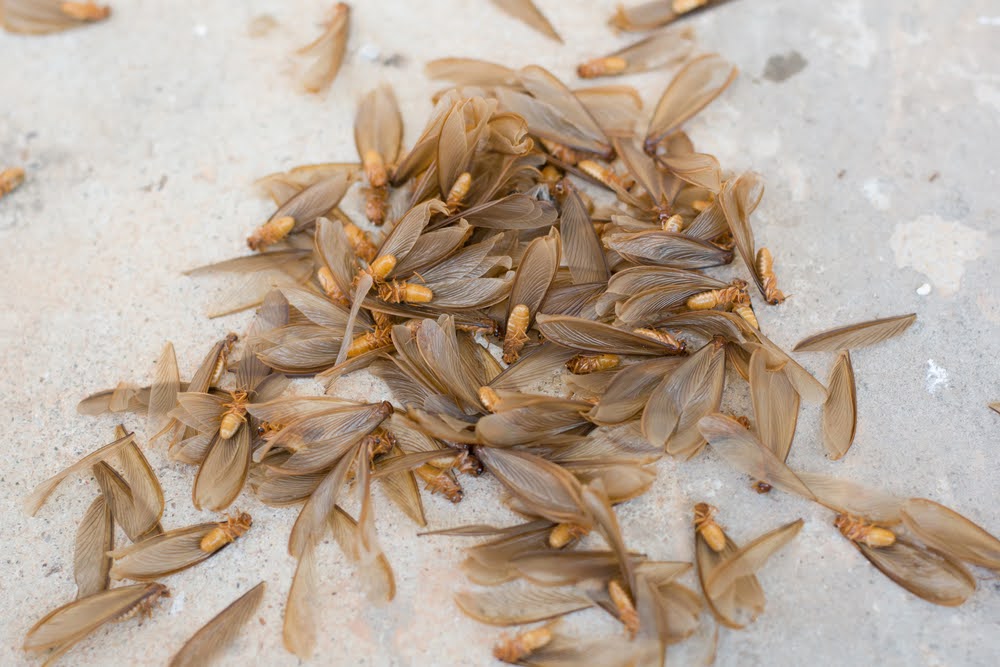
Take a breath. Spotting flying termites early is actually good news. These insects called swarmers are reproductive termites looking to start new colonies. Seeing them gives you a chance to act before serious damage occurs.
This guide covers:
- Immediate steps to eliminate flying termites you see right now
- Natural methods that actually work (and their limits)
- When professional help is necessary
- What Central California homeowners need to know about swarming season
Important: Seeing swarmers does not automatically mean you have an established infestation, but it does mean inspection is needed.
What Are Flying Termites & Why They Suddenly Appear
Before you can effectively deal with flying termites, you need to make sure that’s actually what you’re seeing.
Flying Termites vs. Flying Ants: Know the Difference
Correct identification matters. Many Central California homeowners confuse flying ants with termite swarmers.
- Body shape: Termites have straight, thick waists. Flying ants have pinched waists.
- Wings: Termites have four wings of equal length that extend past their bodies. Ants have uneven wing sizes.
- Antennae: Termite antennae are straight and beaded; ants’ antennae are bent or elbowed.
Why Flying Termites Suddenly Show Up
Swarming happens when mature termite colonies release reproductives under the right conditions: warm temperatures, moisture, and seasonal timing.
In Central California, primary swarming typically occurs March–May, with additional swarms possible after rainfall throughout the year. Swarmers are attracted to light, which is why they often appear near windows, doors, and lamps.
They’re not targeting your home specifically; they’re following light and searching for suitable nesting sites.
What Swarmers Tell You About Your Home
Where you see flying termites matters more than how many you see.
- Emerging from walls, baseboards, or ceilings: Likely indicates an established colony inside the structure.
- Flying in through windows or doors: May be coming from outside, but still requires prevention and monitoring.
In short: swarmers inside = investigate immediately.
Do Flying Termites Mean You Have an Infestation?
Not necessarily, but swarmers are always a serious warning sign. Each pair of swarmers could potentially start a new colony in your home if they find suitable conditions. And where there are swarmers, there’s often an established colony somewhere producing them.
Immediate Steps: How to Get Rid of Flying Termites Fast
When you spot flying termites, here’s exactly what to do right now.
Step 1: Act Quickly (Not Emotionally)
Take photos, note locations, and record the time of activity. This information is extremely useful during inspection.
Step 2: Vacuum Visible Swarmers
Vacuum all visible termites. Immediately seal and discard the contents outdoors.
Step 3: Reduce Light Attraction
Turn off unnecessary lights, close entry points, and consider using exterior lights placed away from the home to draw swarmers outward.
Step 4: Temporary DIY Traps
- Shallow bowls of water under lights (add a drop of dish soap)
- Sticky traps near windows and doors
These reduce numbers but do not eliminate the source colony.
Step 5: Look for the Source
Check for:
- Discarded wings
- Small exit holes
- Activity near wood-to-soil contact points
These steps remove visible swarmers and buy you time. They do not eliminate the colony producing them.
What These Steps Actually Accomplish
These immediate actions reduce the visible swarmer population, prevent new termites from entering, and potentially stop new colonies from establishing in your home. They buy you time and gather valuable information for professional assessment.
But here’s the reality: these steps don’t eliminate an existing colony producing the swarmers. Think of it like this: you’re dealing with the scouts, not the army.
Natural Methods to Get Rid of Flying Termites
Many homeowners prefer natural solutions, especially for pest problems inside their homes. Let’s look at what works, what doesn’t, and where natural methods fit into termite control.
Natural solutions are best for short-term control, not long-term elimination.
- Vinegar or dish soap sprays: Kill termites on contact only
- Orange oil: Limited to surface-level exposure
- Neem oil: Useful for prevention, not active infestations
- Diatomaceous earth: Works only if termites crawl through it
These methods help reduce visible activity but do not reach hidden colonies.
The Honest Truth About Natural Methods
Natural methods reduce visible swarmer numbers temporarily. They make you feel like you’re taking action, and in the short term, they do help. But they don’t eliminate the colony producing those swarmers. They don’t provide long-term protection against future swarming events. And they don’t stop ongoing structural damage if an established colony exists.
Natural solutions work best as part of an integrated approach that includes professional treatment. Use them for immediate control, then call in experts to address the root problem.
Prevention: Keep Flying Termites from Coming Back
Once you’ve dealt with the immediate swarmer situation, prevention becomes your focus.
Light Management During Swarming Season
Flying termites are drawn to light, especially at dusk during peak swarming months (March–May in Central California). Use yellow “bug lights” outdoors, limit indoor lighting in the evening, and close curtains or blinds near windows. Make sure window and door screens are intact so you can ventilate without inviting swarmers inside.
Moisture Control (Critical in Central California)
Termites need moisture to establish colonies. Fix leaks quickly, improve airflow in crawl spaces and attics, and ensure water drains away from your foundation. Watch irrigation systems, AC condensation lines, and consistently damp areas common moisture sources in Central California homes.
Remove Entry Points
Seal cracks around foundations, walls, windows, and doors with caulk or sealant. Replace worn weather stripping, screen vents, and seal gaps around pipes and wiring. Repair damaged or exposed wood before termites can use it as an entry point.
Landscape Modifications
Keep at least six inches between soil and wood siding, and avoid placing mulch near the foundation and use gravel instead. Trim vegetation away from the home, remove dead wood or stumps, and store firewood elevated and at least 20 feet from the structure.
Regular Monitoring
Check for discarded wings, mud tubes, or activity near windows and doors during swarming season. Even without visible signs, annual professional inspections help catch problems early and prevent costly damage.
When to Call a Professional (And Why It Matters)
Natural methods have their place, but there are clear situations where professional help isn’t optional—it’s necessary.
Clear Signs You Need Professional Help
Call a professional immediately if flying termites are emerging from inside your walls, baseboards, ceiling, or any other interior location. This indicates an established colony inside your home’s structure.
If you find piles of discarded wings inside your home, swarmers have landed and are attempting to establish colonies. If you see mud tubes on your foundation or walls, an active colony is present. If you’ve spotted flying termites multiple times in the same area over days or weeks, there’s likely a colony nearby.
Any signs of wood damage—hollow-sounding wood when tapped, blistering paint, sagging floors, or doors that suddenly won’t close properly—require immediate professional assessment. And if you’ve tried natural methods but swarmer activity continues or returns, the colony is established and needs professional treatment.
Why Professional Treatment Is Different
Licensed pest control companies have access to commercial-grade termiticides that aren’t available to consumers. These products are significantly more effective than retail options. More importantly, professionals can treat the actual colony, not just the visible swarmers you see.
Professional treatments include whole-structure protection systems that create barriers termites can’t cross. With 25 years of experience protecting Central California homes, RidX technicians have the expertise to identify hidden colony locations that homeowners typically miss.
Professional treatment comes with long-term guarantees and follow-up monitoring. If termites return after treatment, reputable companies like RidX come back for free.
The Cost of Waiting
Every swarming season without treatment represents potential new colonies establishing in your home. Established termite colonies cause $3,000 to $20,000 or more in structural damage over time.
Natural methods won’t prevent ongoing damage from existing colonies. They’re temporary Band-Aids on a problem that requires surgical precision. Early professional intervention saves thousands in repair costs later.
What to Expect from RidX
We offer free termite inspections to assess your situation accurately. Our honest assessment tells you whether you have an active infestation requiring treatment or just passing swarmers that need monitoring.
You’ll receive transparent pricing before any work begins—no surprises, no hidden fees. We explain treatment options in plain language without confusing jargon. Our 100% guarantee means if termites return after treatment, we come back for free. No questions asked, no additional charges.
Don’t Wait for the Next Swarm
Termite swarming happens seasonally. If you saw swarmers once, you’ll likely see them again next season—or sooner. The colony producing those swarmers is actively growing and potentially causing damage while you wait.
One inspection now prevents major repairs later. It’s that simple.
Flying Termites in Central California: What Local Homeowners Need to Know
Our region has unique characteristics that affect termite swarming patterns and home vulnerability.
Our Unique Swarming Patterns
Central California’s primary swarming season runs from March through May when temperatures consistently hit 70°F or higher. However, we also see secondary swarming activity after any significant rain, which means occasional fall and even winter swarms.
Our mild climate creates longer swarming windows than many other regions. Both subterranean termites and drywood termites produce swarms here, and they don’t always swarm at the same times.
Why Central Valley Homes Are Prime Targets
Irrigation systems throughout Fresno, Bakersfield, and Madera create year-round moisture that attracts termites. Older wood-frame construction common in established neighborhoods provides easy access and abundant food sources.
The combination of adobe and wood construction styles popular in our area creates ideal conditions for termite colonies. Our mild winters mean termites stay active longer throughout the year compared to regions with hard freezes.
Common Mistakes Fresno/Bakersfield Homeowners Make
Many local homeowners assume one swarming event is just a fluke and don’t investigate further. Confusing termite swarmers with flying ants is extremely common in our area—both are active during spring months.
Some homeowners think the problem solved itself when swarmers disappear after a few hours or days. They don’t realize the swarmers were just the visible tip of a hidden problem. Others wait until spring to investigate fall or winter swarmers, giving colonies months to establish and grow.
Local Resources & Support
RidX has protected Central California homes for 25 years. We understand regional termite behavior, seasonal patterns, and the construction styles common in Fresno, Bakersfield, and Madera. Local expertise matters for effective treatment timing and long-term prevention strategies.
Common Mistakes When Dealing with Flying Termites
Learn from what doesn’t work so you can focus on what does.
The biggest mistake? Ignoring flying termites because they “went away.” Swarmers only fly for a brief period—usually just a few hours. Their disappearance doesn’t mean your problem is solved. The colony remains and continues growing.
Relying only on DIY natural methods creates a false sense of security. You feel like you’re addressing the problem, but the colony continues causing damage while you experiment with remedies that can’t reach it.
Mistaking flying termites for flying ants leads to completely wrong treatment approaches. Termites cause serious structural damage that most ant species don’t. Proper identification is essential.
Finally, many homeowners kill visible swarmers without investigating where they came from. They treat the symptom without finding the source. You need to identify the actual colony location to eliminate the problem permanently.
Protect Your Home from Flying Termite Damage
After 25 years of protecting Central California homes, we’ve learned that early action makes all the difference. Inspect your home’s exterior every few months, watching for mud tubes, moisture issues, or discarded wings. Keep vegetation trimmed to make inspections easier, take photos to track changes, and don’t ignore small warning signs; catching them early can save thousands in repairs.
Focus first on moisture control, since it has the biggest impact on termite activity. Fix leaks, improve drainage, clean gutters, and adjust irrigation away from your foundation. Tackle other prevention steps gradually, but even with strong DIY prevention, schedule a professional termite inspection at least once a year to catch hidden activity.
For complete peace of mind, RidX Pest Control offers professional termite protection backed by a 100% guarantee. With 25 years of local experience, we know what works in Central California. Schedule your free termite inspection today and protect your home before the next swarm starts.
