 | Proudly Serving the Central Valley | 24/7 On Call Service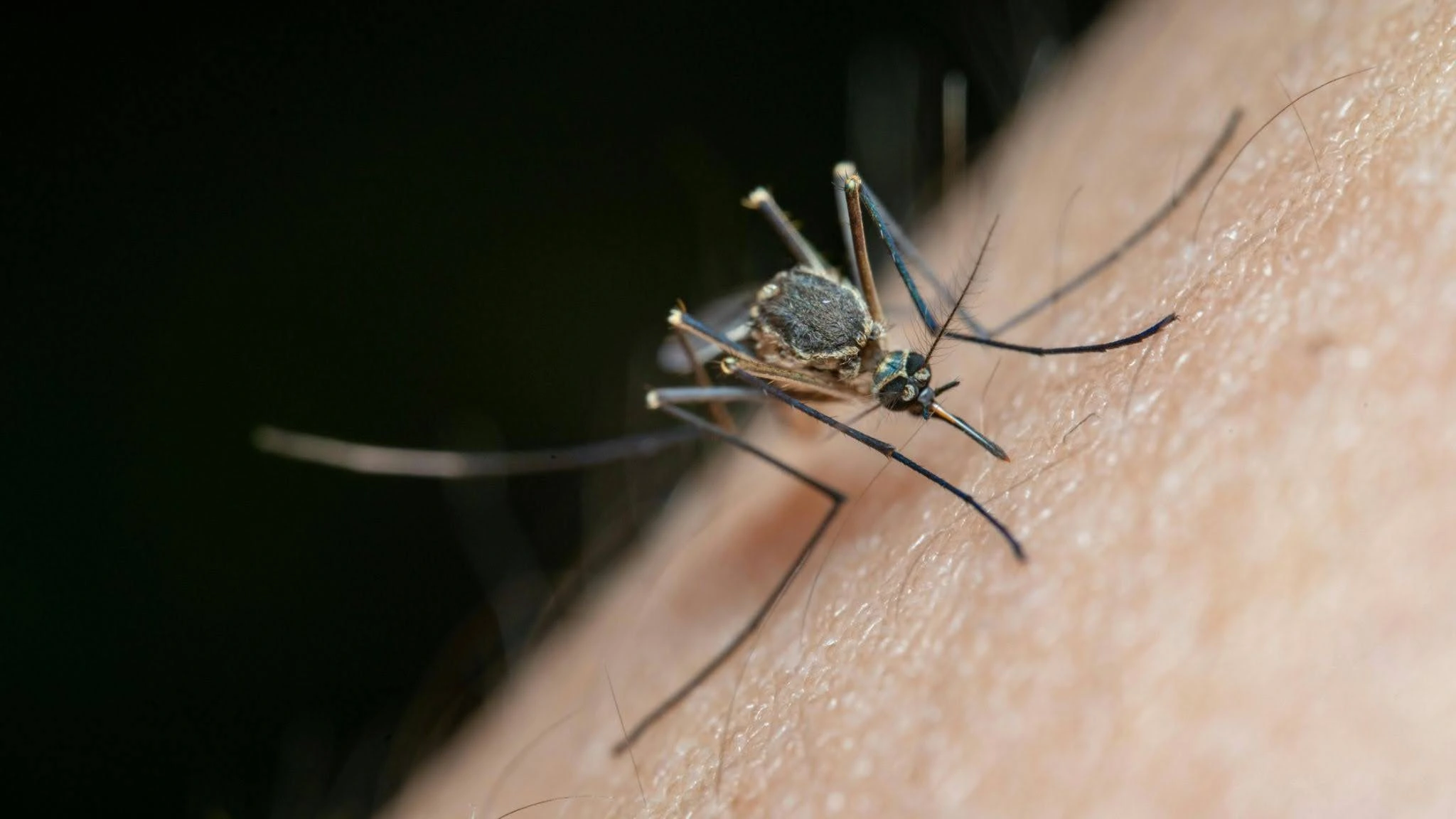
West Nile virus is the leading cause of mosquito-borne illness in the continental United States, and it causes about 100 deaths and thousands of cases every year — even though there’s still no vaccine or medicine to treat it. Since prevention is the only real defense, the CDC’s own guidance centers on two things: reducing mosquito breeding sites around a property and using an EPA-registered repellent when mosquitoes are active.
A one-time yard spray addresses adult mosquitoes for a few days at best. A proper mosquito exterminator visit treats standing water sources where mosquitoes actually breed — the step most homeowners skip — which is why it holds up through an entire Central Valley summer instead of needing a redo every few weeks.
Why a Single Yard Spray Doesn’t Last
Adulticide sprays kill the mosquitoes present at the time of treatment, but they don’t touch the eggs and larvae developing in a birdbath, clogged gutter, or drainage ditch nearby — so a new generation of adults is often flying within a week.
The CDC’s household-level guidance specifically calls out applying mosquito dunks or other larvicides to areas with standing water as a core control step, alongside contacting a mosquito control program or licensed professional for adult mosquito treatment. That combination — larvicide at the source, adulticide for the immediate problem — is exactly what separates a mosquito exterminator visit from a single fogging treatment.
What Makes Mosquito Control Worth Taking Seriously
Most people who catch West Nile virus never notice, since roughly four out of five infections cause no symptoms at all — but the one in five who do get sick face fever, headache, and body aches that can last for weeks.
A small share of infections turn severe, causing inflammation of the brain or spinal cord that can lead to long-term disability, and people over 60 or with certain underlying health conditions face the highest risk. None of that requires panic — it requires the same unglamorous habit the CDC recommends every summer: keeping standing water out of the yard and treating what can’t be drained.
What a Central Valley Mosquito Season Actually Looks Like
Irrigation runoff, unused pools, pet water bowls, and clogged rain gutters all count as breeding sites, and the Central Valley’s long, hot season gives mosquitoes more generations per year than cooler parts of California.
A property near irrigated agriculture or a canal has an extra source of standing water that a homeowner can’t fully control, which is often why a single-treatment approach fails here specifically — the mosquitoes have an offsite breeding ground the treatment never reaches. A professional visit maps out on-property breeding sites, treats what can be treated directly, and sets a realistic expectation for what ongoing pressure from surrounding water sources will look like.
Timing matters too. Flood or furrow irrigation on nearby fields creates a predictable spike in mosquito activity a few days after each watering cycle, which means a property downwind of active agriculture may need treatment timed around that schedule rather than a flat monthly calendar.
Choosing an EPA-Registered Repellent
Not every product labeled “insect repellent” is equally effective. The CDC’s guidance narrows the field to six active ingredients with meaningful backing: DEET, picaridin, IR3535, oil of lemon eucalyptus, para-menthane-diol, and 2-undecanone.
Products containing one of these ingredients, used according to the label, are considered safe and effective by the CDC even for pregnant and breastfeeding women — a detail worth knowing given how much repellent marketing implies otherwise about “natural” alternatives without real testing behind them.
The EPA registration number on the label is the simplest way to confirm a product meets this standard; its absence is a reasonable reason to skip a product regardless of what the packaging claims about being all-natural or DEET-free.
Mosquito Season Doesn’t Have to Own Your Backyard
The goal isn’t zero mosquitoes — it’s getting back to using a yard in the evening without planning around bites. That takes source control more than spray frequency.
If mosquitoes are keeping your Madera, Fresno, or Bakersfield yard off-limits after 6pm, call RidX Pest Control at (888) 298-7513 or request a free inspection to find the breeding sites a one-time spray always misses.
